How Beginners Can Start a Career in Data Science Without a Tech Background
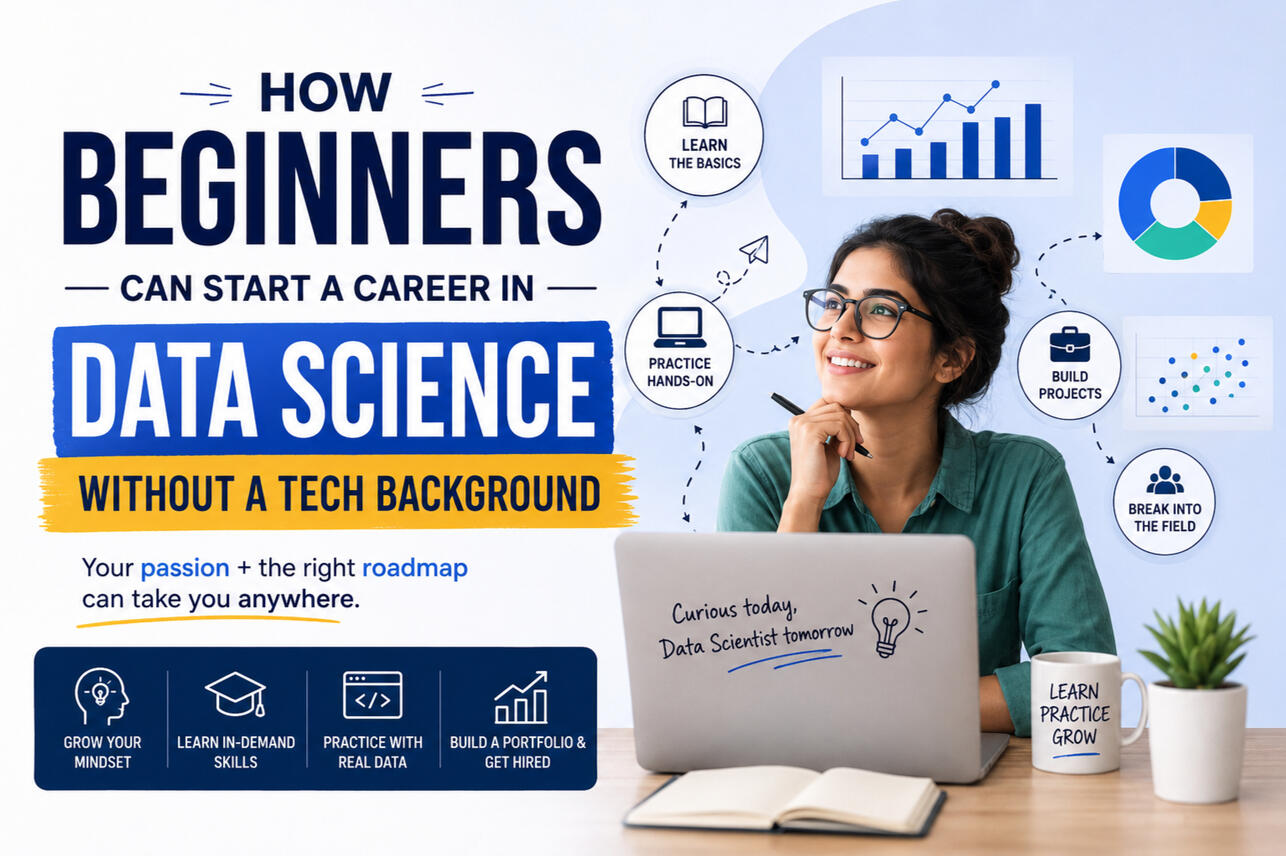
If you don't come from a computer science background, you may feel like data science is not for you. This is one of the biggest myths in the industry today.
The truth is simple. Data science is not only for engineers or coders. It is for anyone who is willing to learn, practice, and stay curious. Many successful data scientists today come from commerce, biology, economics, arts, and even teaching backgrounds.
This guide will show you a clear, honest path to start your data science career, even if you are starting from zero.
Do You Really Need a Technical Background for Data Science?
No, you don't. Data science is a mix of three things: statistics, business thinking, and some programming. You can start with one and learn the others along the way. You just need to build them one step at a time.
Think of it like driving a car. You don’t need to know how the engine works—you just need to know how to use the controls. Data science works the same way.
Many companies today hire data analysts and data scientists who came from non-tech fields. What matters most is your ability to think logically, solve problems, and understand data patterns.
Core Skills You Will Need to Build
You don’t need to learn everything at once. Focus on these three areas, and grow them slowly.
1. Statistics and Logical Thinking This is the real foundation of data science. You need to understand basic concepts like averages, probability, and how to read data trends. You don’t need to be a math expert to get started. You just need patience.
2. Basic Programming (Python and SQL) Python is the most beginner-friendly language for data science. It reads almost like English. SQL helps you retrieve, manage, and organize data from databases. Both can be learned in a few months with regular practice.
3. Business and Domain Understanding Data without context means nothing. Understanding how a business works helps you turn numbers into useful insights. This is often the skill that non-tech professionals already have an edge in, especially if you come from sales, marketing, or finance.
Step-by-Step Roadmap for Absolute Beginners
Here is a simple roadmap you can follow, one step at a time.
Step 1: Build Your Foundational Math and Logic Start with basic statistics and probability. You don't need advanced calculus. Focus on understanding data, not memorising formulas.
Step 2: Learn Python from ScratchBegin with the basics—variables, loops, and functions. Then move to data libraries like Pandas and NumPy. Take your time here. Most people who quit early do so because they rush this step.
Step 3: Understand Data Handling and Visualisation Learn how to clean messy data and turn it into simple charts and graphs. Tools like Excel, Power BI, or Python's Matplotlib are great starting points.
Step 4: Practice with Real Datasets Work on free datasets from platforms like Kaggle.. Try to solve real problems, like predicting sales or understanding customer behaviour. This is where real learning happens.
Step 5: Build a Small Portfolio Create two or three small projects and share them on GitHub or LinkedIn. This shows employers that you can apply what you have learned, not just talk about it.
How Long Does It Realistically Take?
There is no fixed timeline, but most beginners take around 6 to 12 months to become job-ready, if they practice consistently. This depends on how many hours you can dedicate each week and how structured your learning path is.
Avoid shortcuts that promise instant results. Data science is a skill you build brick by brick, not something you unlock overnight.
Career Switch Paths from Non-IT Roles
If you are switching careers, you are not alone. Many people move into data science from very different backgrounds.
Commerce and Finance professionals often move into data analytics roles, since they already understand numbers and business reports.
Marketing professionals transition well into roles like marketing analytics, where they study customer behaviour using data.
Teachers and educators often do well in data storytelling, since they already know how to explain complex ideas simply.
Mechanical and Civil engineers frequently shift into data roles because their problem-solving mindset transfers well.
Your past experience is not wasted. It becomes your unique advantage.
Common Mistakes Beginners Make
Avoiding these mistakes can save you months of wasted effort and frustration.
Jumping straight into Machine Learning before understanding the basics of statistics and Python.
Skipping hands-on projects and only watching video tutorials.
Ignoring SQL, which is used daily in almost every data role.
Comparing your progress to others, which often leads to giving up early.
Learning at your own pace is completely fine. Everyone's journey looks different.
Choosing the Right Data Science Course as a Beginner
If you plan to join a structured course, look for a few important things. Check if the course offers hands-on projects, not just recorded lectures. Look for mentor support, so you can clear doubts quickly. And check if the curriculum builds from the basics, instead of assuming prior coding knowledge.
If you are based in Bengaluru and looking for a data science course in Bengaluru, it helps to choose an institute that focuses on practical training rather than just theory. Innomatics Research Labs is one such training institute, known for its hands-on approach to data science and AI education. Along with its Bengaluru center, Innomatics also has branches in Hyderabad, Dilsukhnagar, and Pune—making it a strong option for students looking for classroom training with real project exposure.
Whichever course you choose, look for clear and flexible pricing with no vague promises. A good training program should focus on building your skills first.
If you’d like details on the course structure, batch timings, or syllabus, you can contact the team on WhatsApp for a quick response.
Final Thoughts
Starting a career in data science without a tech background may feel difficult at first, but it is absolutely possible. Focus on learning step by step, practice with real data, and build a small portfolio to show your skills.Your background is not a weakness. It is the unique perspective you bring to every data problem you solve.
FAQS
Can a commerce or arts student become a data scientist?
Yes. Many data scientists today come from non-technical academic backgrounds. Business understanding from commerce or arts studies often helps in real-world data problems.
Are data science jobs available for freshers without a computer science degree?
Yes. Companies today value skills and project experience more than the specific degree you hold. A strong portfolio can often open more doors than a degree alone.